
How Office Design Plays a Key Role Workplace Wellbeing
It’s hard to think that anything good came out of the Covid pandemic and the ongoing daily stresses leftover from it, but the increased focus on wellbeing in the workplace by employers could possibly be one.
According to Mental Health UK’s latest benchmark report for burnout, 1 in 5 adults needed time off work in the past year due to poor mental health caused by pressure or stress. Not only that, research from the CIPD has revealed that employee sickness absence is at the highest level for 15 years. There is clearly work to be done by all employers in the UK to improve their workplace wellbeing.
What is workplace wellbeing?
There are various terms for it – wellness at work, workplace wellness, workplace wellbeing – but they are all the same thing. An understanding of the link between work, health and wellbeing that translates into company-wide initiatives and strategies designed to support and encourage healthy behaviour in the workplace.
These strategies should take a holistic approach, supporting both mental and physical health and need to run through the core of the organisation. Initiatives can include medical screenings, onsite fitness programmes or facilities, flex-time for exercise or relaxation, access to counselling services, healthy food options and encouraging an open and collaborative environment.
Wellness at work also includes considering the physical environment employees come into daily. Is it ergonomically designed? Does it encourage an open and inclusive culture? Is there space for employees to relax and recharge? Or maybe get some private time if needed? Is it safe?
What role does office design play in workplace wellbeing?
Done right, an office or workspace of any kind can make those using it feel empowered, enabled and good about ourselves and what we do. Done wrong or without consideration, it can actually increase stress and illness.
What are the key areas of workplace design?
Air quality
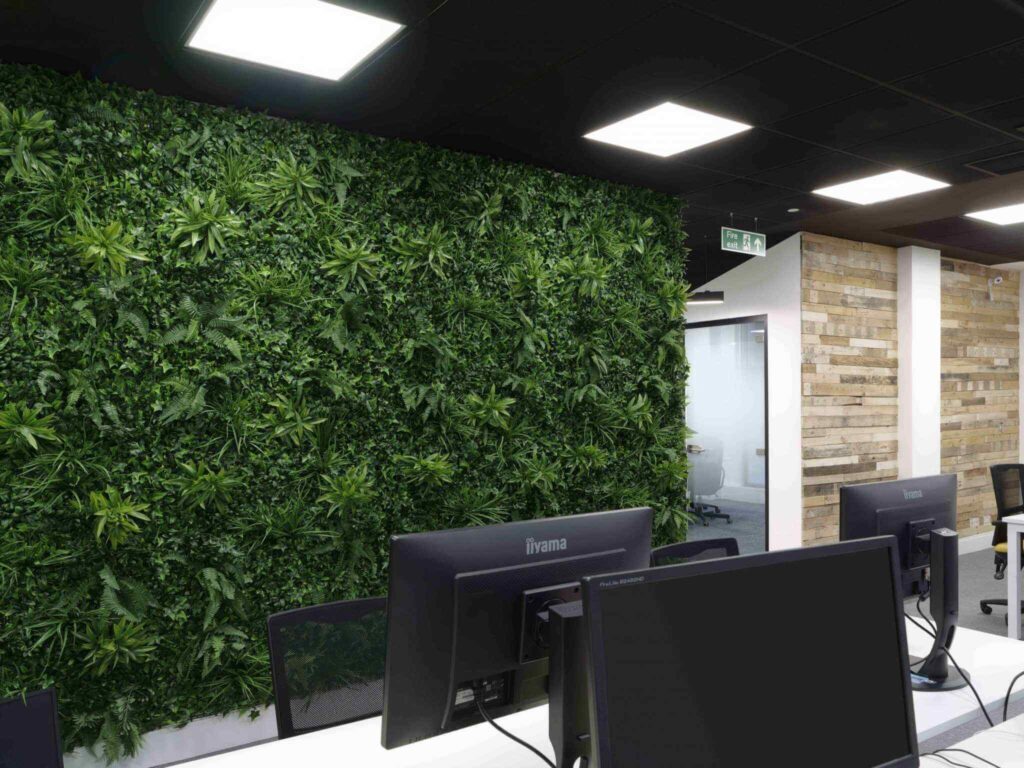
Good air quality helps us concentrate and there are several ways to ensure the air quality is tip-top at all times, ranging from air purifiers to good quality ventilation systems to indoor plants and biophilic systems. Biophilic systems are commonly known as living walls and are becoming very much part of the modern working space, whether it’s a school, restaurant or office.
Lighting
The years of buzzing artificial lights are past. The benefits of ‘alternate lighting’ has finally been recognised. You may also know it as ‘natural light’. Yes, daylight. Without it, the working day feels longer, as well as increasing instances of fatigue and eye strain.
Light wells can help funnel daylight into areas where you think it may not be possible. Removing blinds and curtains immediately increases natural light into a room. Mirrors, glass doors and glass partitions are also excellent features for spreading the light you’ve got.
Design/layout

Workstations should be positioned to provide the option of privacy as well movement and interaction. Today’s workspace is all about providing zones that allow different types of working, whether it’s on a solo project or collaborating with the team. Are there chillout/relaxation areas for breaks from work?
Wellness rooms are becoming ever increasingly popular in offices – rooms where people can get away from it all for a while. It may be a designated exercise or yoga room. It may be a digital detox room with creative activities set up. The options are endless.
Acoustics
Sometimes we need noise and a buzzing environment to motivate us; sometimes we need peace and quiet to focus on something or de-stress. Colleagues’ phone calls, machinery and the hum from electrical equipment can often increase noise levels to that of a noisy restaurant – and we’re working in that for a large portion of our day!
How the sound bounces around the interior is vital to the success of the workplace. The use of materials within the environment can dampen, absorb and reflect sound. These include carpets, curtains, upholstered furniture, dividers and acoustic panels, baffles and bass traps.
Colour, texture and decor
Colour has a big impact on a space – for example, blues and greens have a relaxing effect whilst reds bring energy and passion to the conversation. Consider what the space is being used for and identify the colours that reflect that.
Texture is equally as important. In a creative space, textures that engage the mind work well; art and sculpture adds character and encourages creativity; and natural materials, like wood, water and living walls have been very popular since Covid.

Furniture
Ensuring the right furniture for the right user is key; it’s all about posture. Standing desks, tasked chairs and agile furniture that allows us to switch between tasks swiftly can make work easier for us all.
Why is workplace wellness so important?
As employers, we have a duty of care for the health, safety and welfare of our workers and this should be based on employee needs.
- There are many benefits to taking a proactive attitude to wellbeing at work:
- Better morale and engagement
- A healthier and more inclusive culture
- Better work-life balance for everyone from the top down
- Reduced absenteeism, presenteeism and leavism
- Reduced employee churn and recruitment costs
How does your workplace wellness stack up?
Looking around your office, what areas can you see that could be improved to have a positive effect on the wellbeing in your workplace?
Invisible Group is London’s leading office fit out and refurbishment specialists. Our approach is simple – to create a fresh and aesthetically appealing commercial space that meets the needs of your business, sets you apart from the competition, reflects your unique brand identity to your clients, and inspires your team.
Make a list of your workplace wellbeing issues today and let us help you resolve them. We’ll create the solution that benefits you and your employees. Contact Invisible Group today for a free quote.
Call us today!